
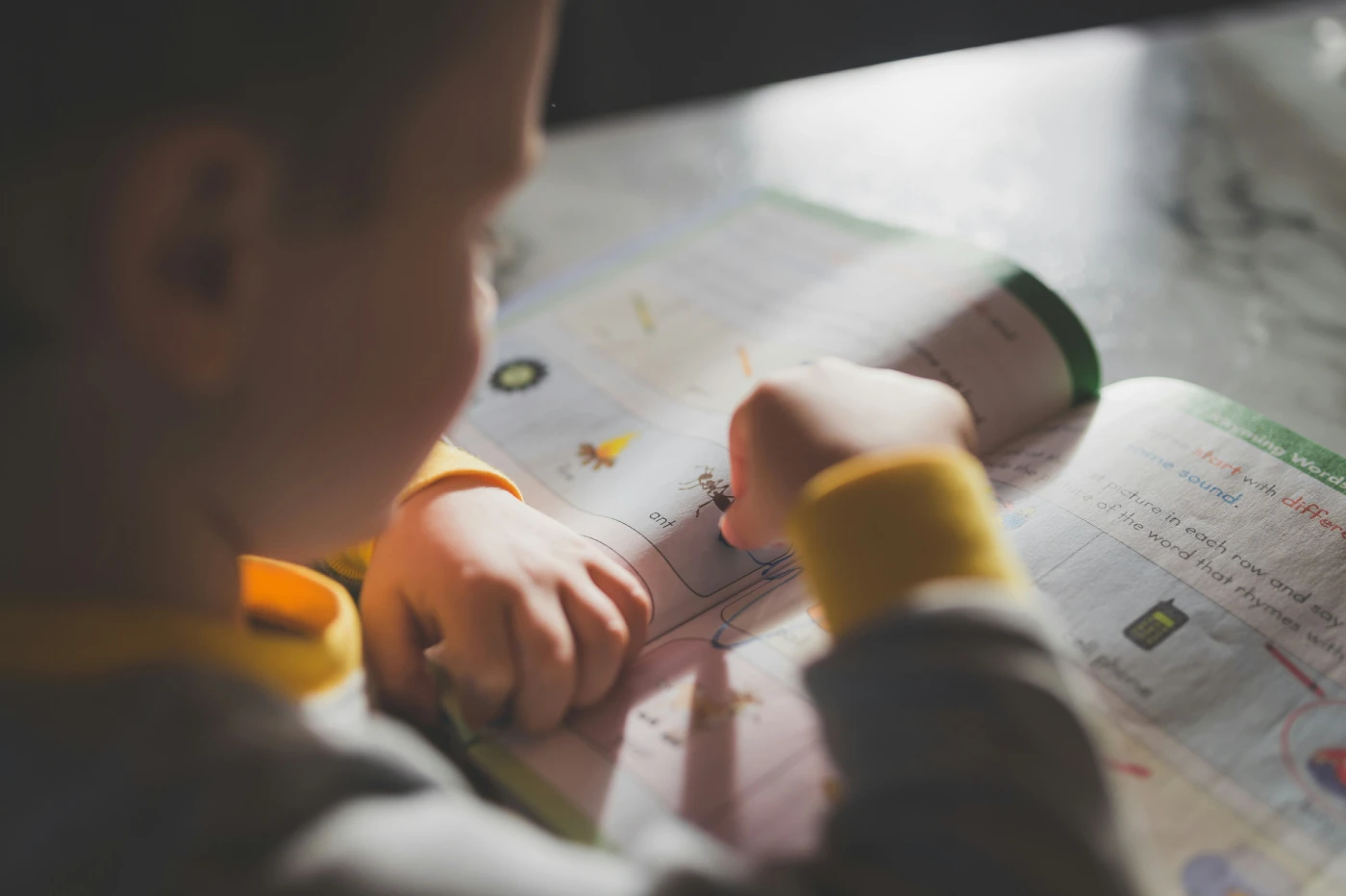
A Correct Answer Isn’t Always Complete Understanding
A child gets the right answer to a maths problem. The teacher asks, “How did you get that?” The child pauses, starts to explain, and halfway through realises they are not sure why the method works. They got the answer by copying a pattern from the last question.
That moment is useful. It shows a gap that a correct answer had hidden. Asking children to explain their answers is one of the simplest ways to find what they do not yet understand, and it improves their learning at the same time. This article covers the research, the practical methods, and the limits.
Why Correct Answers Can Hide Gaps
Pattern matching looks like understanding
Children are good at spotting patterns. If the last five problems used the same method, they can apply it to the sixth without knowing why it works. The answer is right, but the understanding is thin.
The gap only shows up later, when the problem looks different or appears in an exam alongside other types of questions.
This is common in maths and science homework, where exercises are grouped by topic. A child who scores ten out of ten on a worksheet may still be confused when the same idea appears in a mixed test.
Everyone overestimates what they understand
A 2002 study by Leonid Rozenblit and Frank Keil asked adults to rate how well they understood everyday objects such as zippers and toilets. Then they were asked to explain step by step how these objects worked. Their ratings dropped sharply after they tried. Researchers call this the illusion of explanatory depth.
The same thing happens in classrooms. A student who says “I get it” after a lesson on photosynthesis may be unable to explain where the plant’s mass actually comes from. The sense of understanding was real. The understanding itself was incomplete.
Children experience the same illusion. Feeling familiar with a topic is not the same as understanding it, and explaining is what reveals the difference.
What Research Says About Explaining
The self-explanation effect
In studies from 1989 and 1994, cognitive scientist Michelene Chi and colleagues found that students who explained worked examples to themselves while studying learned more than those who simply read them. The strongest learners spontaneously asked themselves why each step made sense.
Later studies found that prompting students to self-explain improves learning, even for students who would not do it on their own.
Learning by teaching
A 2014 study by John Nestojko and colleagues found that people who studied a passage expecting to teach it to others recalled more and organised the information better than people who expected a test. Preparing to explain changes how people study.
Why it works
Explaining forces children to put ideas in order, connect them to what they already know and fill in missing steps. When a step is missing, they notice, because the explanation stops making sense.
Explaining also slows children down. Rushing to an answer skips the thinking. Having to describe each step means actually going through it.
Answer Only vs Answer With Explanation: A Comparison
| Aspect | Answer only | Answer with explanation |
|---|---|---|
| What the teacher sees | Right or wrong result. | The reasoning behind it. |
| Gaps revealed | Only when the answer is wrong. | Even when the answer is right. |
| Effect on learning | Limited. | Stronger understanding and recall. |
| Time needed | Short. | Longer. |
| Example | “The answer is 24.” | “I multiplied 6 by 4 because there are 4 rows of 6.” |
The Obvious Objection: It Takes Too Much Time
Asking every child to explain every answer would slow a lesson to a crawl. Teachers have a syllabus to finish, and parents helping with homework have limited evenings.
The solution is to be selective. Ask for explanations on a few key questions, especially new concepts or problems a child got right unusually fast. Pair explanations let two children explain to each other at the same time, which covers the whole class in a couple of minutes.
There is a second concern worth taking seriously. Children who find it hard to express themselves in English may understand a concept well but struggle to explain it. Let them explain in their home language, with a drawing, or by showing the steps with objects. The goal is to see the thinking, and any clear form of explanation works.
Finally, explanations can be confidently wrong. A child may give a fluent explanation of a misconception. Explaining finds gaps only when an adult or peer listens and responds.
How Teachers Use Explanation in Class
Here are common classroom methods:
– Asking “how did you get that?” after correct answers as well as wrong ones.
– Think, pair, share, where students explain their reasoning to a partner before sharing with the class.
– Writing a one-line explanation beside key answers in homework.
– Error analysis, where students explain why a sample wrong answer is wrong.
– Peer teaching, where a student who understands a topic explains it to a small group.
This approach fits board exam preparation well. The CBSE marking scheme awards marks for steps and reasoning, not only the final answer, so students used to explaining their work tend to lose fewer marks. Parents comparing cbse schools in bangalore can ask how teachers check reasoning in written work and class discussion.
Many of the best schools in Bangalore also use short written reflections at the end of a lesson, where students explain the main idea in their own words. These take a few minutes and give teachers a quick view of who has understood.
Teachers can then group students by the gaps they find, rather than moving the whole class on together. A student who explains fractions clearly can move ahead, while one who cannot gets another round of practice with the same concept.
How Parents Can Use Explanation at Home
Parents do not need to know the subject well for this to work. Often, a parent who does not know the answer is the best audience, because the child has to explain properly.
– Ask your child to teach you one thing they learnt at school today.
– When checking homework, pick one correct answer and ask how they got it.
– If the explanation stops or gets vague, note the topic and mention it to the teacher.
– Ask “why does that step work?” rather than “is that right?”
– Praise clear explanations as much as correct answers.
Keep the tone curious rather than testing. If your child feels they are being checked on every answer, they may start giving short, defensive responses. Asking because you genuinely want to know how they worked it out keeps the conversation open.
Key Takeaways
– Correct answers can hide gaps, especially when children copy a pattern without understanding it.
– People, including children, overestimate their understanding until they try to explain.
– Self-explanation and preparing to teach both improve learning and recall.
– Be selective about when to ask for explanations, and accept drawings or home-language explanations.
– Explaining helps most when someone listens and corrects misconceptions.
Conclusion
Explaining an answer shows whether a child understands a concept or has only learnt to produce the right result. It exposes gaps that tests often miss and strengthens the learning in the process.
The method needs no special resources. A few well-timed “how did you get that?” questions, at home or in class, give children a regular chance to find what they do not yet understand while it is still easy to fix.
Frequently Asked Questions
-
What is the self-explanation effect?
It is the finding that students who explain material to themselves while learning understand and remember it better. -
Why ask my child to explain a correct answer?
A correct answer can come from copying a pattern. Explaining shows whether your child understands the method. -
What if my child cannot explain their answer?
That is useful information. Go through the topic together or let the teacher know which part is unclear. -
Does explaining help in board exams?
Yes. Board exams award marks for steps and reasoning, and students who practise explaining tend to present their working more clearly. -
Can young children explain their answers?
Yes, in simple ways. Young children can explain by pointing, drawing or using objects. -
How often should I ask for explanations?
A few times during each homework session is enough. Focus on new topics and answers that came quickly.