
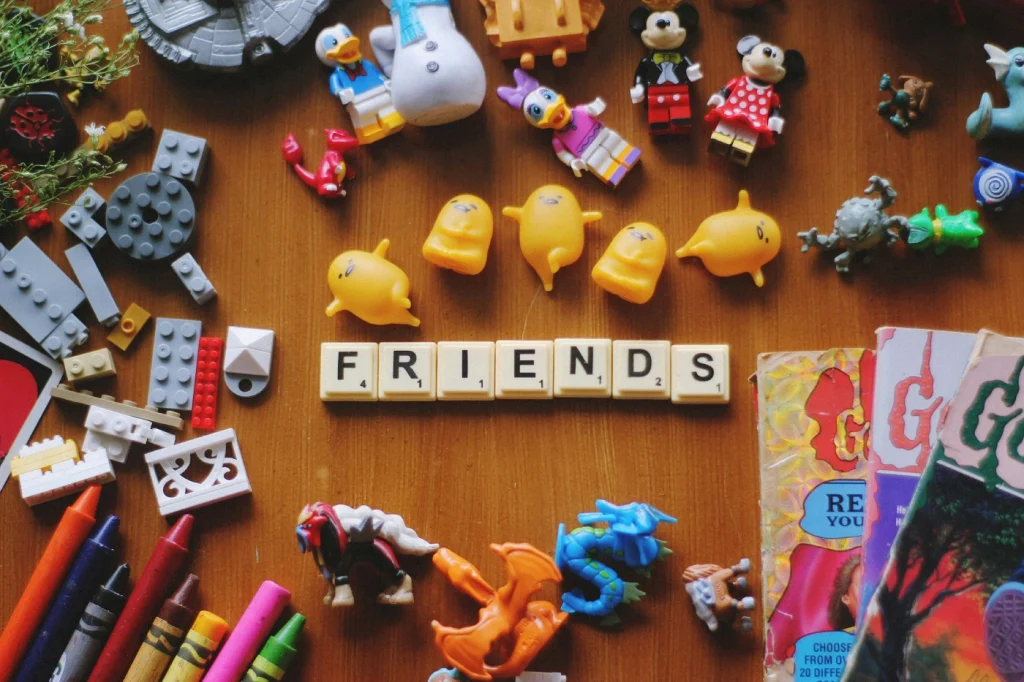
Think back to your own school years, and chances are the moments that stay with you most vividly involve people, not lessons. A friend who stood up for you, a group that became your reference point for who you were, a falling-out that taught you more about yourself than any exam could. School friendships are rarely just social. They are formative.
For children today, navigating friendships while managing academic pressure, digital social lives, and a wider world than previous generations encountered at the same age is genuinely complex. Understanding why school friendships are an important part of growing up — and how to support children through them — is something both parents and schools can approach with more intention.
What School Friendships Actually Do for Children
Friendships in school do much more than fill lunch breaks. They are the primary context in which children practise and develop a range of skills that formal teaching alone cannot build: negotiation, empathy, trust, conflict resolution, and the ability to understand perspectives different from their own.
Children who have at least one stable, mutually supportive friendship at school consistently show better emotional regulation, higher academic engagement, and greater resilience in the face of setbacks. This is not a coincidence. A friend is a social scaffold — someone who makes the environment feel safe enough to take risks and recover from failure.
The Social Skills That Friendships Build
Friendships are where children run real social experiments. Every interaction teaches something: how to read what someone means when their words say something different, how to make amends after an argument, when to compromise and when to hold firm. These are not skills that can be taught through a worksheet.
Key Social Competencies Children Develop Through Friendships
- Empathy: Learning to recognise and respond to how another person feels, often by getting it wrong first and correcting course.
- Communication: Understanding that how something is said matters as much as what is said, and adjusting accordingly.
- Conflict resolution: Working through disagreements without adult intervention, which builds confidence and independence.
- Loyalty and trust: Understanding what it means to be reliable and to expect reliability in return.
- Social reading: Noticing group dynamics, picking up on unspoken rules, and navigating complex social environments.
Schools that create genuine opportunities for peer connection — not just structured group work but informal time and shared experiences — tend to produce students who are more socially confident and adaptable. This is worth considering when evaluating best schools in Bangalore, particularly for families whose children are on the quieter or more introverted side and who may need more deliberate scaffolding to build connections.
Friendships in Early School vs Secondary School: How They Shift
The nature of school friendships changes significantly as children grow. Understanding this progression helps parents respond appropriately at each stage rather than applying the same expectations across very different developmental moments:
| Stage | Typical Friendship Pattern | What Children Are Learning | Common Challenge |
|---|---|---|---|
| Early Primary (ages 4–7) | Fluid, activity-based, often changes daily | Basic sharing, turn-taking, parallel play | Difficulty maintaining friendships across days |
| Middle Primary (ages 8–11) | More stable pairs or small groups, identity-forming | Loyalty, in-group norms, exclusion dynamics | Cliques and falling-outs |
| Secondary (ages 12–16) | Intense, identity-defining, peer influence peaks | Values, social identity, romantic dynamics begin | Peer pressure, social media complexity |
When Friendship Problems Become Distress Signals
Not all friendship difficulties are a normal part of growing up. Some patterns deserve closer attention from parents and schools:
- Persistent social isolation — a child who reports having no friends across weeks or months, not just a temporary falling-out.
- Dramatic changes in behaviour, appetite, or sleep linked to social situations at school.
- Reluctance to attend school that specifically coincides with events involving certain peers.
- Complaints of repeated exclusion, mockery, or social manipulation by the same group.
- Withdrawal from family and activities they previously enjoyed.
If several of these signs appear together, it is worth speaking both with the child and with the school. Many top schools in Bangalore have dedicated pastoral care or counselling support for exactly these situations, and early intervention makes a substantial difference.
How Parents Can Support School Friendships Without Taking Over
There is a fine line between supporting a child’s social life and managing it for them. Cross it too readily and you remove the very friction that helps children develop social skills. Stay too far back and a child who is genuinely struggling gets less support than they need.
What Helps
- Ask open-ended questions about the school day that invite stories, not just answers — “Who made you laugh today?” rather than “Did you play with anyone?”
- Create space at home for informal gatherings without too much structure or supervision.
- Model how you navigate your own friendships — including disagreements and repairs.
- Resist the urge to immediately fix a falling-out. Ask your child what they think might help first.
What Does Not Help
- Contacting other children’s parents about minor social conflicts before speaking to your own child.
- Dismissing friendship problems as trivial — “You’ll have forgotten about it by next week.”
- Scheduling so many activities that children have no unstructured time to simply be with peers.
- Telling a child who they should or should not be friends with, rather than asking questions about why a friendship feels good or difficult.
The Role Schools Play in Supporting Peer Connections
Schools have more influence over social dynamics than many parents realise. Timetable structure, how breaks are supervised, whether collaborative projects give students genuine choice in who they work with, and how social conflicts are handled by staff — all of these shape the friendship landscape for every student.
Families evaluating cbse schools in bangalore or other options might ask specifically how the school approaches social development, what pastoral systems exist, and whether there are dedicated opportunities for students to connect across year groups. The answers can tell you a great deal about how seriously a school takes the whole child, not just academic results.
Friendships and Long-Term Wellbeing
The effects of school friendships extend well beyond the school gate. Longitudinal studies consistently find that children who had at least one close, stable friendship during their school years report higher wellbeing, greater life satisfaction, and stronger social networks as adults. The social confidence built through early peer relationships shapes how people approach collaboration, romantic partnerships, and community belonging throughout their lives.
This is part of why parents considering nursery schools in Bangalore should factor in the social environment of a school alongside academic programmes. A setting where children feel safe to connect, where friendships are nurtured rather than left to chance, gives children a developmental advantage that is genuinely hard to replicate elsewhere.
Key Takeaways
- School friendships are a primary context for developing empathy, conflict resolution, and communication skills.
- Children with at least one stable school friendship show better emotional regulation and academic engagement.
- Friendship patterns shift significantly across primary and secondary school — understanding these shifts helps parents respond appropriately.
- Persistent isolation, school avoidance, and sudden behavioural changes are worth taking seriously as social distress signals.
- Schools that actively support peer connection and social development produce students who are more confident and resilient.
Conclusion
School friendships are not a distraction from education. They are part of it. The social learning that happens through peer relationships — the negotiation, the repair, the moments of genuine connection — shapes children in ways that follow them into adult life. Supporting that process, without short-circuiting it, is one of the most valuable things parents and schools can do.
If you are choosing a school with your child’s whole development in mind, the social environment of a school deserves as much attention as its academic record. A child who thrives socially and feels a genuine sense of belonging is almost always better positioned to thrive academically too.
FAQs
1. How many friends does a child need at school?
Research suggests even one stable, mutually supportive friendship provides significant emotional and developmental benefit. Quality matters far more than quantity.
2. What if my child says they prefer to be alone?
Some children are genuinely more introverted and need solitude to recharge. This is healthy. What to watch for is forced isolation or active rejection by peers, rather than a preference for quieter company.
3. Are school friendships more important than family relationships?
They serve different functions. Family provides attachment and foundational security; school friendships offer peer-level practice in social skills and a sense of identity outside the family. Both matter.
4. How should I handle it when my child’s friend group excludes someone?
Rather than giving a verdict, ask curious questions — “How do you think that person felt?” and “What could you do differently?” This builds empathy without shaming.
5. At what age do school friendships become most influential?
Peer influence increases steadily from middle primary school and typically peaks during early adolescence, around ages 12 to 14, when identity formation is most intense.
6. Should I intervene if my child is being left out?
If it is persistent and causing distress, yes — speak with the school’s pastoral staff rather than approaching other parents directly. Schools are usually better placed to address group dynamics constructively.
7. Do online friendships count as real school friendships?
Online connections can be meaningful, but they do not fully replicate the in-person practice of navigating social situations, reading body language, and building trust through shared physical presence.
8. How can schools help children who struggle to make friends?
Effective schools use structured buddy systems, mixed-group projects with real collaboration requirements, and pastoral check-ins to identify and support socially isolated students early.